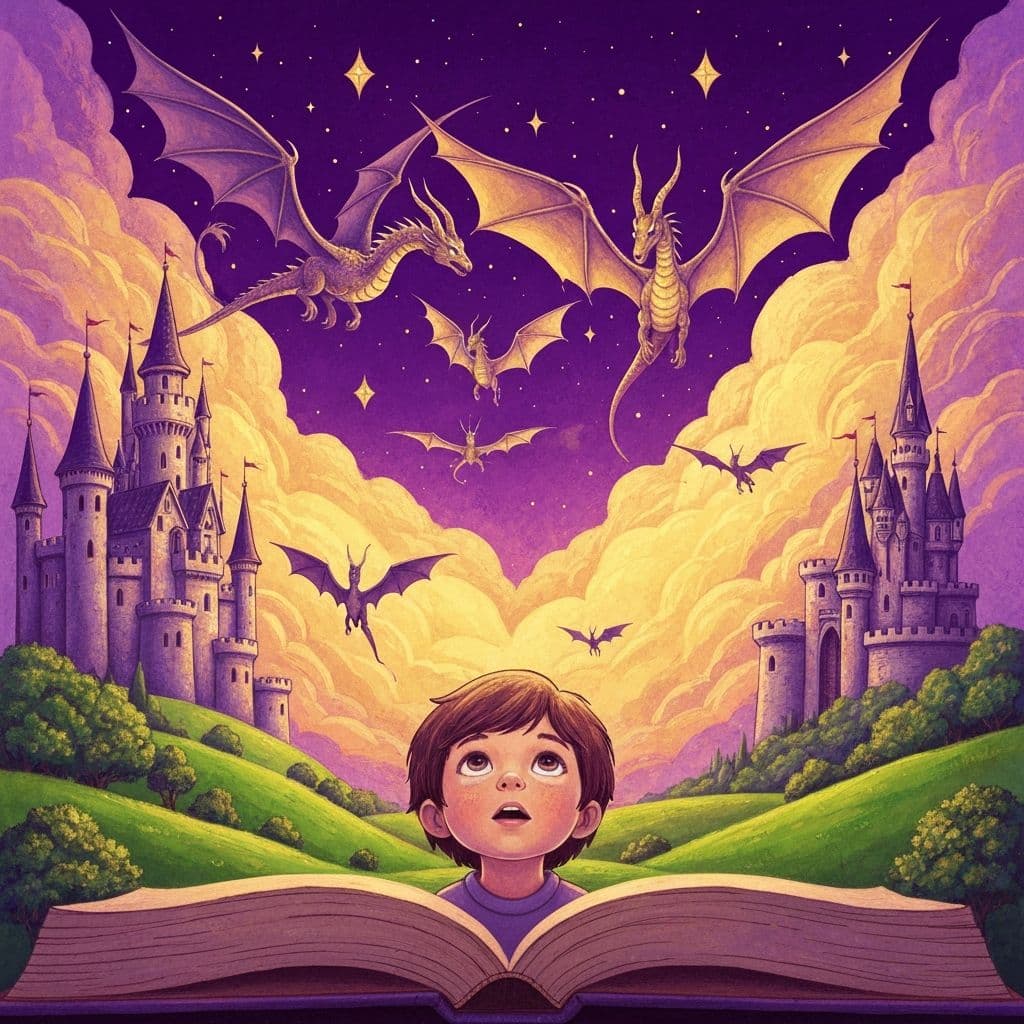

My daughter asked me last week why clouds don't fall. That question came from a story.
Where curiosity begins
Last Tuesday, my six-year-old looked up from her cereal and asked: Mum, why don't clouds fall down? She had heard about a sky kingdom in a bedtime story the night before, and it lodged in her mind, turning into a real question about physics.
That is what stories do. They plant seeds that grow into curiosity, and curiosity grows into knowledge.
Imagination vs fantasy
There is a common worry that imaginative play is just pretend. But cognitive scientists disagree. Imagination is the engine of planning, empathy, creativity, and problem-solving. Children who exercise it regularly are better equipped for school and for life.
Three ways to build it
Tell open-ended stories
Don't resolve every conflict neatly. What do you think the dragon did next? invites your child into the creative process rather than leaving them as a passive audience.
Read widely
Fairy tales, realistic fiction, nature books, silly rhymes. Each genre exercises a different imaginative muscle.
Give boredom a chance
Unscheduled, quiet time — even just 20 minutes — is when children's minds make their most interesting leaps.
Anna believes that a child who can imagine anything can become anything.