
Ever wonder why bedtime feels like a wrestling match? Anna shares the neuroscience behind why stories actually calm your kids' brains—and how to survive the "one more book" phase.
It is 8:45 PM, and I am currently hiding in the pantry eating a slightly stale granola bar just to feel something other than the adrenaline of the "Bedtime Battlefield." My eight-year-old is suddenly a philosopher questioning the origin of the universe, and my three-year-old has decided she is a nocturnal parrot. WHY IS BEDTIME SO HARD? 😩
I used to think my kids were just master negotiators, but then I did some digging into the actual science. It turns out, their little brains are literally swimming in cortisol—the stress hormone—by the time the pajamas come on. Even if they haven't had a "stressful" day, the transition from play to sleep feels like a threat to their nervous system.
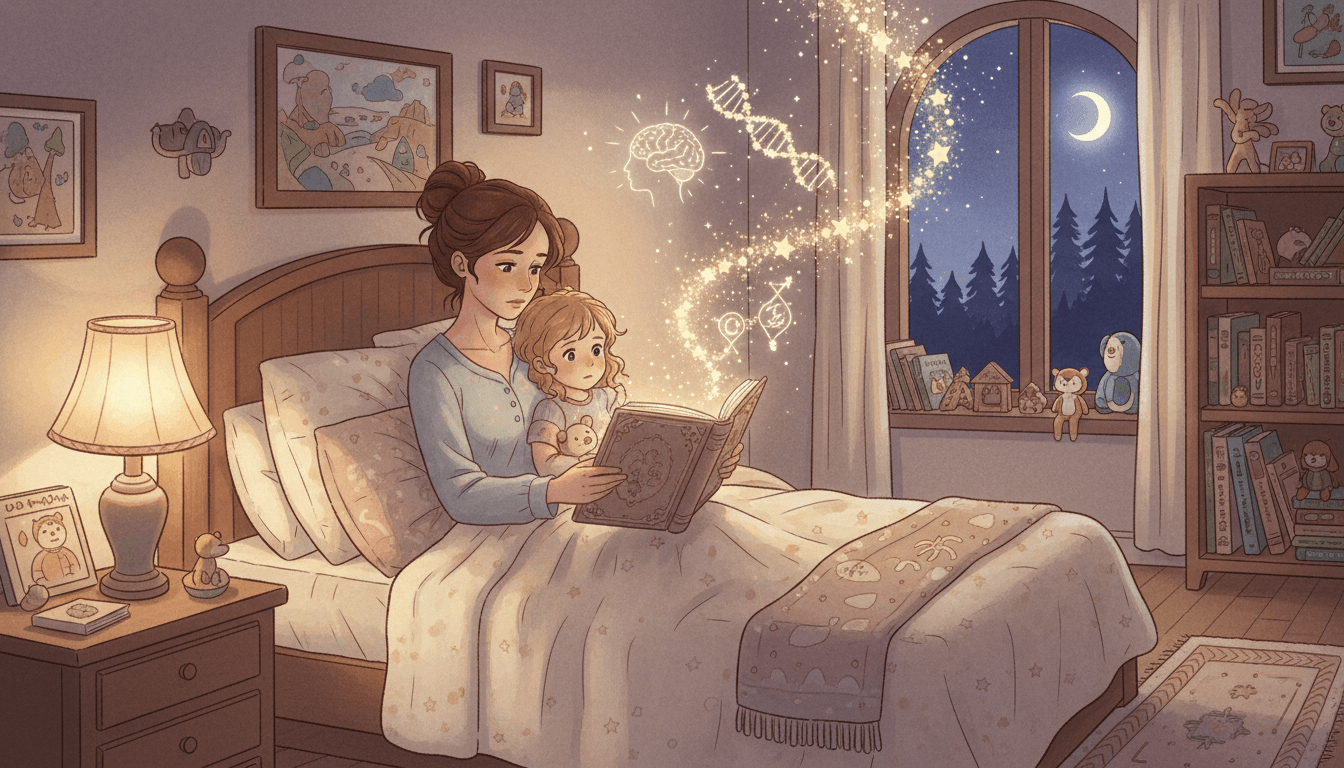
So, how do we fix the chaos without losing our minds? According to Dr. John Hutton’s research, when children listen to stories, their brain activity shifts. It’s like a "neural hug" that shuts down the amygdala (the brain's panic button) and signals to the body that it’s finally safe to power down. 🧠✨
Here is the wild part: reading that same book for the 100th time—you know, the one you can now recite in your sleep—is actually a neurological win! Predictability lowers the cognitive load. When your child knows exactly what’s coming next, their brain stops scanning for surprises and starts producing oxytocin, the bonding hormone.
If you’re tired of the "just one more drink of water" routine, we need to focus on what I call "Neuro-hacks" for storytime. We aren't just reading; we are hacking their biology to induce sleep. It’s basically magic, but with data. 🪄
My Go-To "Sleepy-Brain" Strategy
- The Whisper-Down Technique: Start at your normal volume and gradually lower your voice until you are barely a whisper by the last page. Their brain has to work harder to focus, which naturally quiets their internal noise.
- 4-7-8 Breathing Pauses: I like to build these into the story. "The little bear took a deep breath..." (Inhale for 4, hold for 7, exhale for 8). It tricks their autonomic nervous system into a state of rest.
- Lower the Stakes with Personalized Stories: I’ve been using ReadFluffy to create stories where the "conflict" is super low-key—like a cloud finding a soft place to sit. It avoids the excitement spikes of traditional adventure books.
- Sensory Heavy Narratives: Focus on stories that describe weights, warmth, and soft textures. This mimics progressive muscle relaxation techniques used by adults to fight insomnia.
At the end of the day, it’s not about how many pages you get through or if you do the "cool" voices. It is about that "serve and return" interaction Harvard researchers talk about. That simple connection tells their brain the day is done.
So, tonight, when the three-year-old asks for the "bunny book" for the zillionth time, take a deep breath. You aren't just reading; you are lowering their cortisol and building a healthier brain. We’ve got this, parents! 🥱💪
If you want to make these "neuro-hacks" even easier, check out the ReadFluffy app. It’s basically a cheat code for personalized, calming bedtime stories that actually work.
Now, if you'll excuse me, I think I hear someone out of bed... send help! 🏃♀️💨