Letters that no longer dance.
At ReadFluffy, we believe every child can love stories. That's why we backed our reading experience with science and equipped the app with fonts that help beginning readers and children with dyslexia.
Regular font vs. Andika: What's the difference?
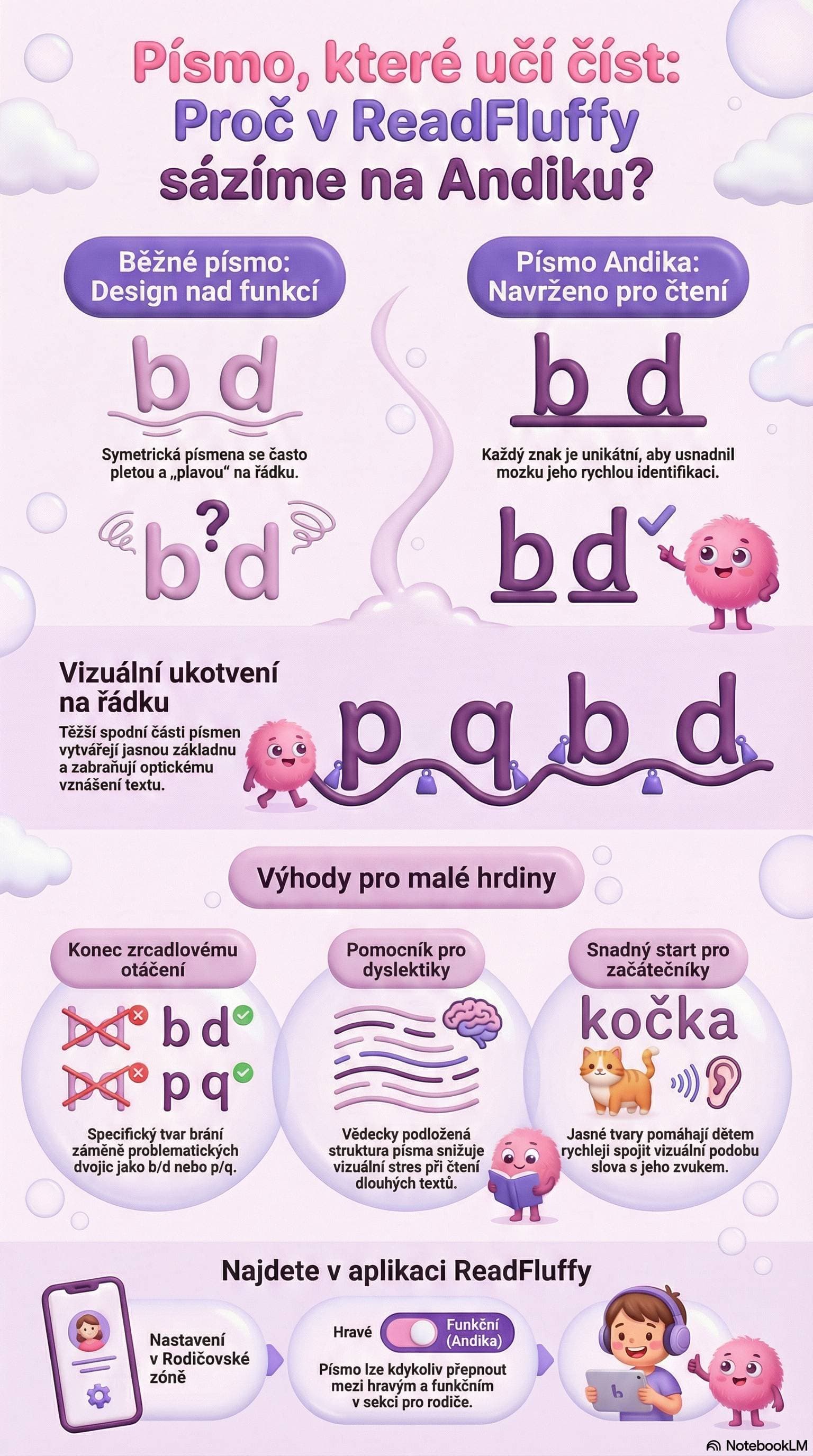
Regular fonts are designed for aesthetics, not readability. Symmetric letters often get confused and optically float on the line. Andika, on the other hand, is designed specifically for reading -- each character is unique to help the brain identify it quickly.
Symmetric letters often get confused and 'float' on the line.
Each character is unique to help the brain identify it quickly.
Typography designed for clarity.
Anti-Mirroring
The font features specifically shaped letters (especially b, d, p, q) that prevent optical reversal and confusion.
Visual Anchors
Characters have heavier bottoms, which visually anchor text to the baseline and prevent the sensation of words floating.
Reduced Cognitive Load
A clean, serif-free design without unnecessary flourishes lets children focus on content, not on deciphering letter shapes.
Visual anchoring on the line
Heavier bottoms of letters create a clear baseline and prevent the optical floating of text. Letters like p, q, b, and d have specific visual weight that keeps them firmly grounded on the line.
Benefits for little heroes
End of mirror reversal
The specific shape prevents confusion of problematic pairs like b/d or p/q.
Helper for dyslexic readers
The scientifically backed font structure reduces visual stress when reading longer texts.
Easy start for beginners
Clear shapes help children more quickly connect the visual form of a word with its sound.
Found in the ReadFluffy app
In the Parent Zone, you can switch between playful and functional (Andika) fonts at any time. The setting is simple and instant -- just one toggle.