
Forget 'just be happy'—parenting is messy! Discover how I use storytime to help my kids handle big feelings without the clichés.
Yesterday, my three-year-old had a full-blown meltdown because I peeled her banana "the wrong way." I stood there, clutching the offending yellow fruit, while my eight-year-old rolled his eyes so hard I thought they might get stuck. It was one of those moments where "just stay positive" feels like a cruel joke. 🍌
Why is it that we expect kids to navigate a hurricane of feelings when most days I can barely handle a cold cup of coffee? We keep hearing about Emotional Intelligence (EQ), but let’s be real—it's messy. It’s loud. And it usually happens in the middle of a crowded grocery store. 🛒
I’ve realized that telling my kids to "just be happy" is about as effective as telling a cat to bark. They don't need clichés; they need a vocabulary for the chaos. And honestly? I found the secret weapon on our messy bookshelf, not in a parenting manual.
Books are the ultimate "safe space" for disaster. When we read about a character making a massive mistake, my kids get to practice those big, scary feelings from the safety of my lap. It’s called "Narrative Transportation"—which is basically a fancy way of saying they are so into the story, they actually feel what the character feels! 📖✨
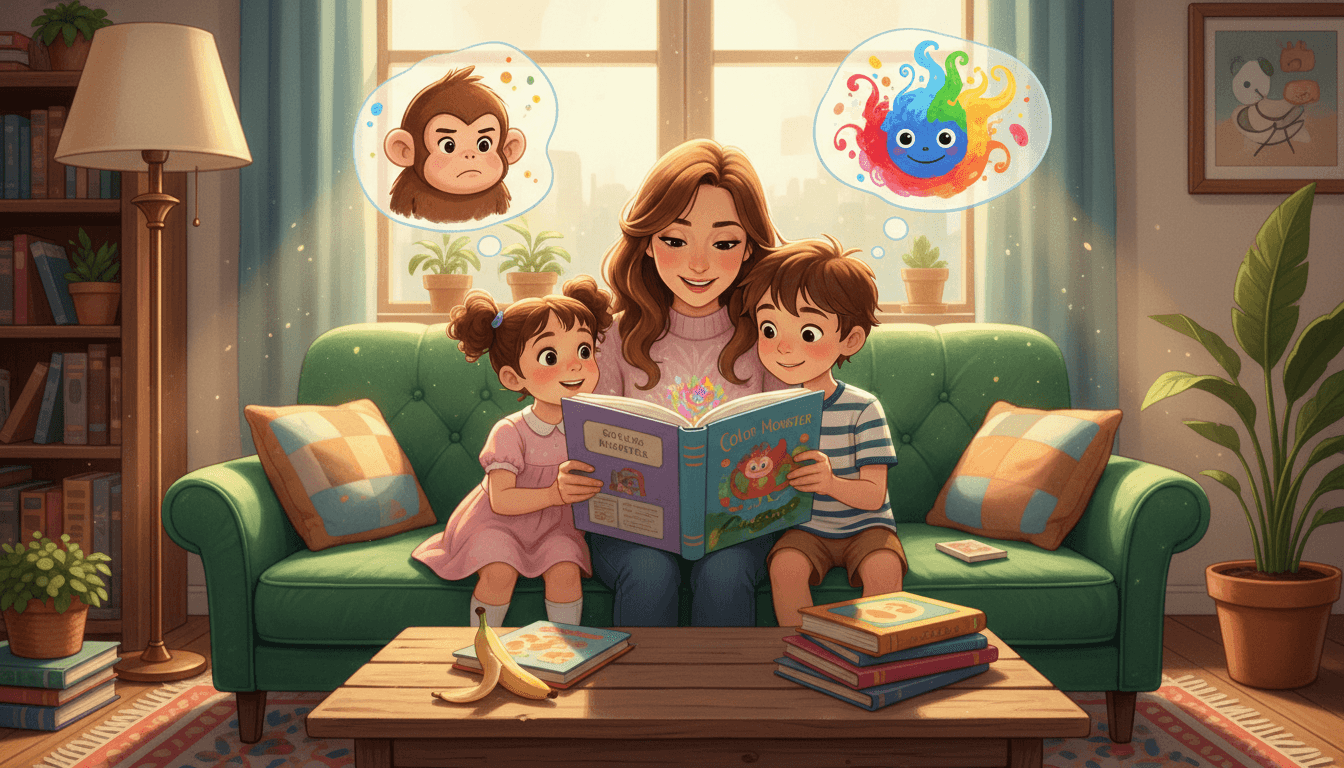
Dr. Marc Brackett from the Yale Center for Emotional Intelligence uses the "RULER" method, and it starts with Recognizing and Labeling emotions. It’s much easier for my son to say, “I feel like the Grumpy Monkey today,” than to explain he’s feeling socially overwhelmed. 🐒
We aren't just reading for the plot; we are building their "Emotional Menu." If they can see a fictional monkey work through a bad mood, they might just realize it's okay for them to be a little grumpy too. No toxic positivity allowed here! 🙅♀️
Here are a few ways I’ve turned our chaotic storytime into a DIY therapy session (without the medical bills):
- The "Pause and Predict" Trick: When a character gets into a pickle, stop reading. Ask, "What do you think their tummy feels like right now?" It builds empathy faster than any lecture.
- Create a "Feelings Menu": We use characters from our favorite stories to describe our day. Are we feeling like a brave Humpty Dumpty today, or more like a worried Color Monster? 🌈
- The Emotion Mirror: While reading, we try to make the same face the character is making. It sounds silly, but it helps my three-year-old connect physical sensations to names of feelings.
- Empathize with the "Villain": Sometimes we talk about why the "bad guy" is acting out. Is he lonely? Is he tired? (Usually, I’m the villain because I won't give them extra snacks, so this one hits home.)
If you’re tired of the "just be happy" mantra and want stories that actually help your kids navigate the real world, you have to check out ReadFluffy. It’s been a lifesaver for finding tales that embrace the messy side of growing up. 📱
Does it stop every tantrum? Goodness, no. But the next time the banana is peeled incorrectly, at least we have the words to talk about the tragedy of it all. What’s the most dramatic reaction your little one has had to a book character lately?
Let’s keep it real and keep reading. It’s the only way we’re all getting through this!